
Commercial Vacuum Maintenance: A Fleet Playbook for Janitorial Companies
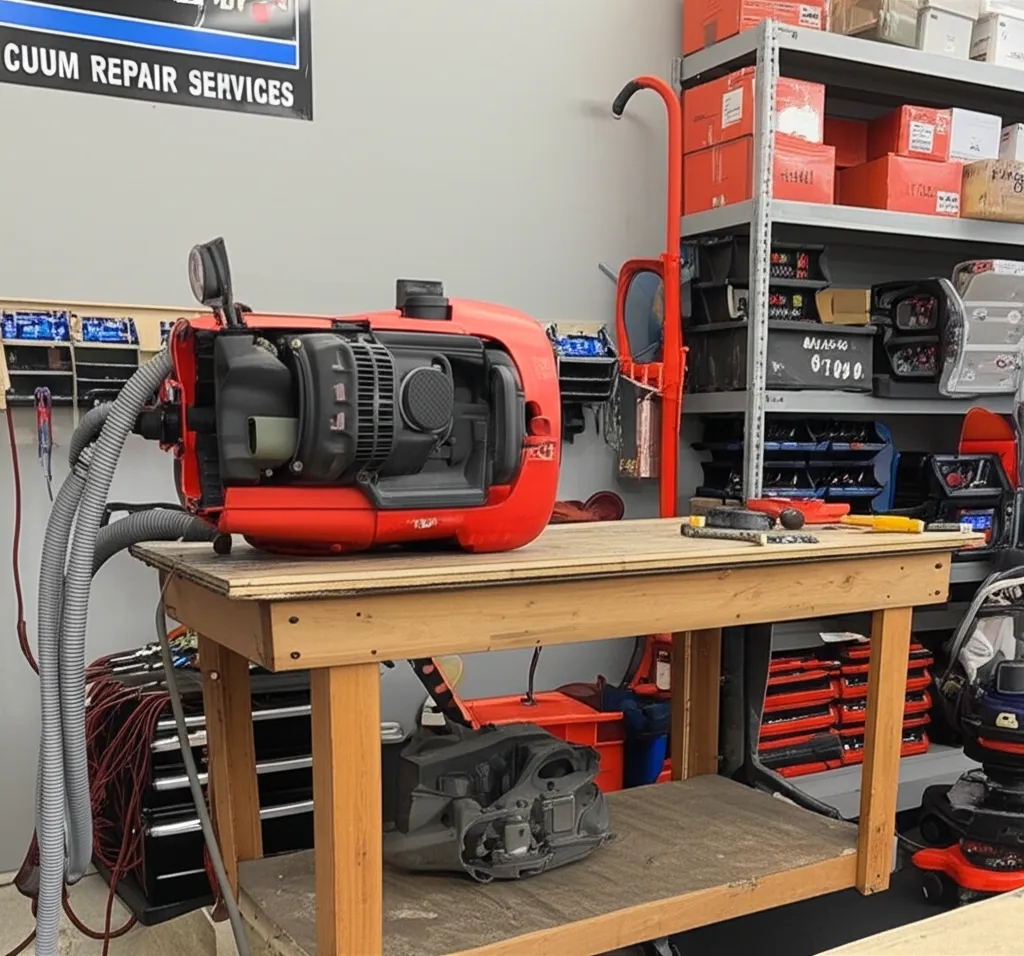
A residential vacuum works a few hours a month. A janitorial fleet machine works a few hours a night, gets run over its own cord, rides in a van, and is operated by whoever was scheduled. Commercial vacuum maintenance isn’t residential maintenance done more often — it’s a different discipline, and after three decades of servicing Richmond janitorial fleets, here’s the playbook we’ve settled on.
The economics: downtime costs more than repairs
When a fleet vacuum dies mid-shift, you’re not paying for a repair — you’re paying a crew that can’t finish a contract. Every rule below follows from that one fact:
- Failures should happen in the shop, not on the job. That means replacing wear parts on schedule, before failure, even though the old part technically had life left.
- Standardize the fleet. Five identical Sanitaires beat five different machines: one belt SKU, one bag SKU, interchangeable parts, and any crew member can operate any unit.
- Keep a rotation float. Fleets that run at 100% deployment have no slack for the inevitable. The fleets that never call us in a panic keep roughly one spare machine per six deployed.
The commercial maintenance schedule
Nightly (the crew, 60 seconds): Check the bag — commercial machines move volume, and a packed shake-out bag or full liner murders motors. Wrap the cord properly; cord damage is the #1 commercial electrical repair and it’s almost entirely technique.
Weekly (the supervisor): Cut wrapped debris off brush rolls. Check the belt for glaze and stretch on direct-air machines — a slipping belt on a Sanitaire announces itself with that hot-rubber smell mid-shift. Look at the brush roll bristle height; commercial carpet eats bristles.
Monthly: Belt replacement on daily-use direct-air uprights — yes, monthly; a belt is the cheapest part on the machine and the most common cause of mid-shift failure. Check fan chamber on shake-out machines for chipped fan blades (the rattle that becomes a motor job). Filter service on filtered machines.
Quarterly (the bench): Motor brush inspection, bearing check, cord and plug electrical test, roller bearing replacement on schedule rather than on failure. This is the visit that catches the $20 problem before it becomes the $200 one.
We run exactly this rotation for Richmond fleet clients — machines cycle through our commercial service without ever leaving a crew short, and the emergency line (804) 677-8208 covers the exceptions.
Teams building a broader facility plan can pair vacuum maintenance with operating resources from TotalMGT, commercial cleaning support like TotalMGT Janitorial Services of Washington DC, and carpet-care guidance from CarpetPros.
The machines that survive fleet life
The commercial floor has its own honor roll, and it’s short: Sanitaire SC-series uprights (the red janitorial standard — simple, fast to service, parts everywhere), Oreck XL Commercial (eight pounds matters when someone carries it up stairwells all night), Hoover Commercial, and well-specced backpack vacuums for open-plan offices. What they share: serviceable motors, cheap wear parts, and designs that tolerate being repaired hundreds of times.
HEPA equipment and hazardous dust: the part that isn’t optional
If your crews run HEPA vacuums on construction dust, lead work, silica, mold remediation, or restoration jobs, the service side has compliance teeth. EPA guidance is blunt about it: opening a HEPA vacuum — changing the filter, emptying the collection chamber — is an exposure event for whoever does it.
That has two consequences. First, those machines need trained handling: PPE, containment, and proper disposal, not a shop-vac shakeout behind the building. Second, don’t service them on a general bench — and don’t let a shop that shrugs at the question do it either. Our technicians carry HEPA/hazardous-dust handling, EPA Lead-Safe, and asbestos awareness training for exactly this work.
When a fleet machine should retire
Track cost per machine per year — even roughly. A commercial upright earns retirement when (a) its annual repair spend crosses about half its replacement cost, (b) it develops a second motor-level failure, or (c) the manufacturer orphans its parts. We tell fleet clients plainly when a unit hits that line, because keeping a dying machine in rotation costs more in downtime than its replacement does in cash — and we sell commercial-grade replacements when that day comes.
Put your fleet on a schedule
If your company cleans for a living in Richmond, Henrico, Chesterfield, or Hanover, one call sets up a maintenance rotation built around your contract load: (804) 262-9683, or the commercial emergency line at (804) 677-8208 when something’s down right now. Estimates up front, 90-day warranty on every repair, and a bench that’s been keeping janitorial fleets running since 1995.
Site and local-service marketing support: Adency.