
Cordless Vacuum Battery Dying Fast? Replacement, Testing & Lithium-Ion Safety
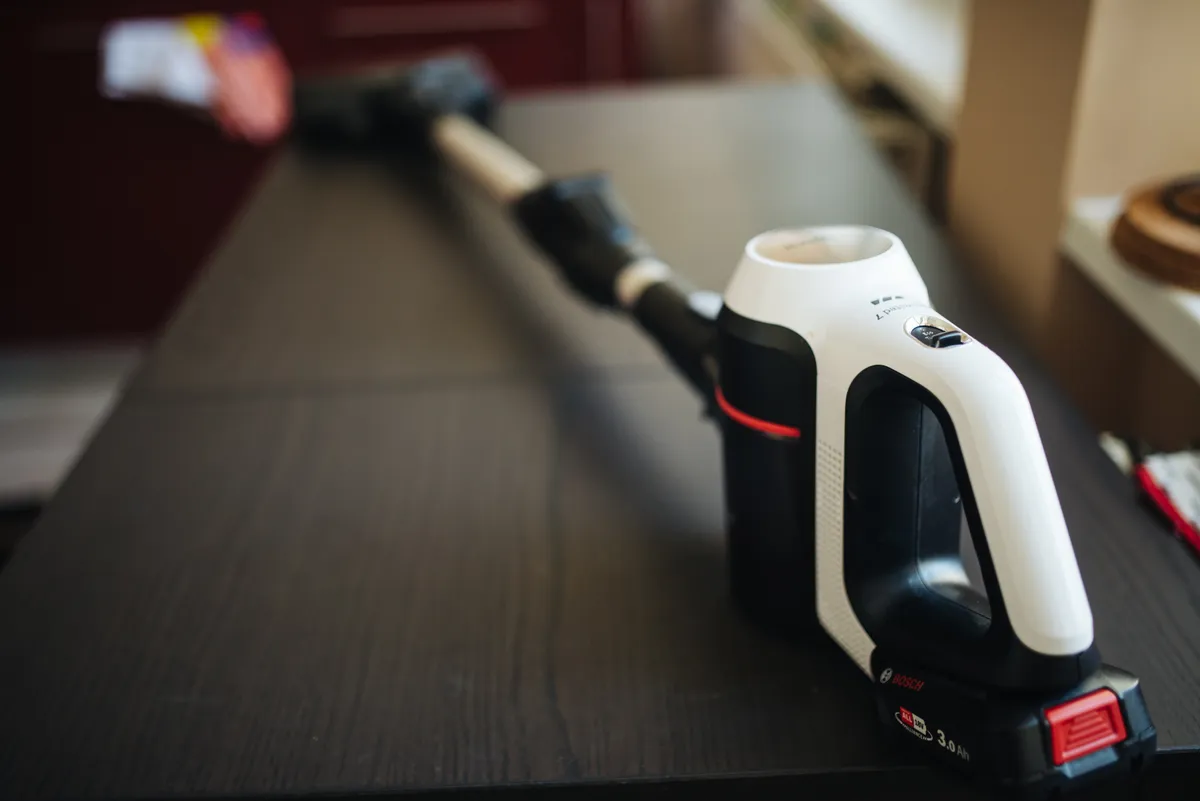
Cordless vacuums changed the repair business more than any machine since the upright. A Dyson V-series or a cordless Shark isn’t really a vacuum with a battery — it’s a battery-management system with a motor attached. So when one starts dying after ninety seconds, the question we answer on the bench is: is it actually the battery? About half the time, it isn’t.
Why lithium-ion batteries fade
Every lithium-ion pack has a chemistry budget: roughly 300–500 full charge cycles before capacity drops noticeably. Heat accelerates the decline — a vacuum charging in a hot garage ages faster than one in a hallway closet. So does sitting at 0% for months. After three to five years of normal use, shrinking runtime is just the battery keeping its original promise.
But the fade pattern matters:
- Gradual decline over months → battery aging. Normal.
- Sudden death or pulsing on and off → usually not the battery.
- Dies in seconds under load but charges fine → could be either. Needs a meter, not a guess.
The great impostor: a clogged machine
Here’s what most owners (and frankly, some shops) miss: a clogged filter or blocked airway makes a healthy battery look dead. When airflow chokes, the motor works harder, current draw spikes, and the battery-management system either drains the pack in minutes or shuts the machine down to protect itself — the pulsing you see on Dysons is exactly this protection circuit doing its job.
We test the pack, the charger, the trigger, and the airflow path separately before recommending anything. Half of the “dead battery” cordless machines that come through our door leave with their original battery and a properly cleaned cyclone. We’d rather lose a battery sale than fit a part you didn’t need — the ISCET electronics training behind the bench is for exactly this kind of diagnosis.
What a proper battery replacement involves
When the battery genuinely is done, replacement should include more than swapping the pack:
- Testing the charger — a failing charger murders new batteries slowly. Fitting a new pack to a bad charger is fitting the next repair.
- Testing the trigger and motor — a worn trigger or dragging motor inflates current draw and shortens the new pack’s life.
- Cleaning the filtration path — see above. A new battery behind a clogged filter performs like the old one.
- A quality pack, not the cheapest pack — bargain cells with mismatched battery-management boards are where the horror stories come from.
We fit replacement batteries for Dyson V6 through current models, cordless Shark lines, Hoover ONEPWR, and most other major cordless systems.
Lithium-ion safety: the part nobody reads until it matters
Lithium-ion packs store serious energy in a small box, and they fail dramatically when abused. The rules worth knowing:
- Never puncture, crush, or open a pack. A damaged cell can enter thermal runaway — a self-feeding fire that water struggles to stop.
- Stop using any pack that’s swollen, hot to the touch, hissing, or smells sweet/chemical. Move it away from anything flammable, outdoors if possible, and don’t charge it again.
- Don’t charge unattended overnight after a pack has been dropped or damaged.
- Never put lithium batteries in household trash or curbside recycling. They start fires in garbage trucks weekly across the country. Take them to a battery drop-off — or bring them to us; we handle old packs through proper channels as part of our battery safety training.
- Buy quality replacements. The no-name pack that costs a third of the price is often missing the protection circuitry that keeps the other rules from mattering.
When to call
If your cordless vacuum is pulsing, cutting out, dying fast, or refusing to charge, call (804) 262-9683 with the model name. We’ll tell you what the likely culprits are before you drive over, test before we replace anything, and back the work with a 90-day warranty. The workshop is appointment-only — and if you’re bringing a swollen battery, tell us on the phone so we can handle it safely when you arrive.